


COLOMBO, SRI LANKA — Artificial intelligence is creating new opportunities for Asian communications consultancies, but local knowledge and cultural understanding will remain essential in shaping effective communication, said Ana Ruby Pista, APR, CEO and Co-Founder of the AI Centre of Excellence (ACE), at THRIVE 2026.
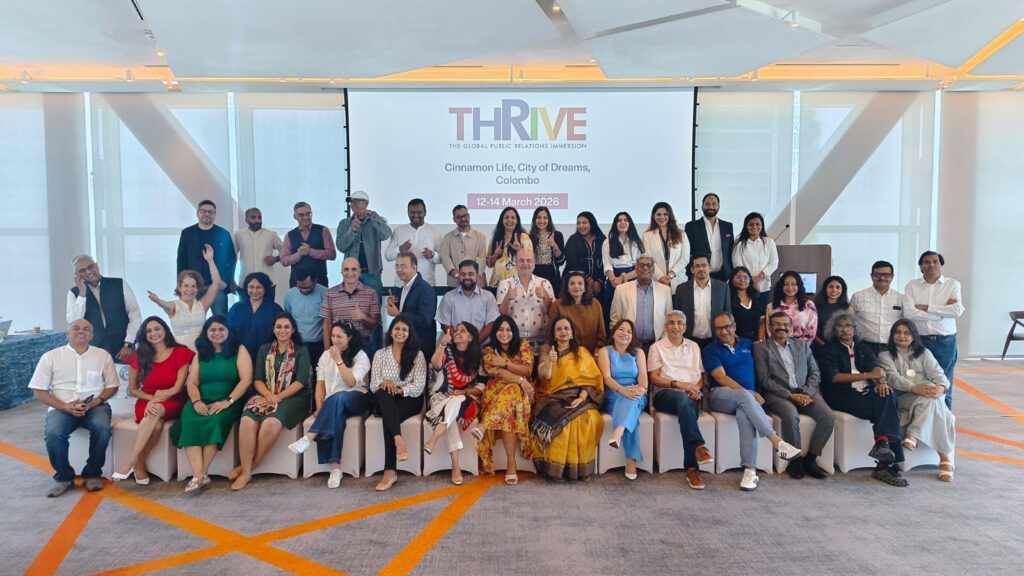
Pista joined communications leaders from across the Asia-Pacific region at the conference, held at Cinnamon Life at City of Dreams from March 12–14, 2026. During the “An Outlook for Asia” panel, industry leaders discussed the region’s growing influence on global communications, including the role of digital innovation, cultural diversity, and emerging technologies.
For Pista, AI presents an opportunity for smaller consultancies to strengthen their capabilities and compete in an increasingly technology-driven industry. However, she emphasized that technology must work alongside human expertise, particularly when communicating with communities with different cultural backgrounds and experiences.
“AI can generate a press release in seconds,” she noted, “but it cannot tell you how that press release will land in a specific barangay, or village, in the Philippines.”
As AI makes routine tasks such as data analysis and content drafting more accessible, communications professionals have more opportunities to focus on strategic counsel, relationship-building, and understanding the communities they serve.
For ACE, this highlights an important consideration in discussions about AI adoption: technology can support communications work, but its value also depends on how people apply it to real-world situations.
Why local knowledge still matters
Pista also highlighted how Asia-Pacific’s social and cultural dynamics distinguish the region from other global communications markets.
“Despite the global statistics, I am profoundly positive about this region because we are not just participating in global communications; we are actively redefining it,” Pista said. “What we lack in market share percentage, we make up for in velocity and cultural complexity.”
The region’s mobile-first, community-driven environments have changed how people discover information, engage with brands, and influence public conversations. Rather than relying solely on traditional media structures, communications strategies increasingly need to account for the relationships and communities through which information travels.
“We consume and create content at the community level, which creates a unique high-trust environment where influence travels through relationships rather than institutions,” she explained. “Culture now travels outward from Asia. Asian culture—from entertainment to food to digital trends—has become globally influential.”
These developments underscore the importance of combining technological capabilities with cultural intelligence. As communications practices evolve, professionals must understand not only how to reach audiences but also how messages are interpreted within specific communities.

Preparing communications professionals for an AI-driven industry
Beyond technology, the panel explored challenges facing the communications industry, including talent retention and geopolitical complexity.
Drawing from her experience at Ardent Communications, Pista discussed how organizations can encourage young professionals to take greater ownership of their work through initiatives such as intrapreneurship and flexible work structures.
“In the Philippines, the creator economy is second nature to young talent. So, we gave them ownership,” she explained. “When a 24-year-old employee feels they are building their own portfolio, not just fulfilling a client’s timesheet, loyalty skyrockets.”
She also emphasized the importance of cultural intelligence in navigating international markets, particularly as geopolitical developments increasingly influence client conversations and communications strategies.
“Geopolitics is no longer a macro-trend; it is a micro-reality in client conversations. In Southeast Asia, we are at the crossroads of the world,” she said.
For communications professionals, these challenges point to the need for continuous learning and the ability to adapt to changing technologies, markets, and cultural contexts.
Shaping the future of communications in Asia
As AI continues to change how communications work is produced and delivered, Pista believes Asian consultancies have an opportunity to contribute more actively to the future of the global industry.
“AI frees us to do what we do best: high-touch, high-context counsel rooted in cultural insight,” she said.
Her remarks at THRIVE 2026 highlighted the potential for Asian communications professionals to combine emerging technologies with their understanding of local communities, cultural dynamics, and regional markets.
As organizations explore the use of AI in their operations, the challenge will be to adopt these tools in ways that strengthen human expertise rather than replace the judgment and contextual understanding that effective communication requires.
For Asian consultancies, this balance could help them build on their existing strengths while adapting to an increasingly technology-driven communications landscape.
About Ardent Communications
Ardent Communications is an independent strategic communications consultancy based in the Philippines. The firm specializes in reputation management, corporate communications, public affairs, and integrated communications strategies, helping organizations navigate complex business and cultural landscapes across Asia.
About THRIVE, The Global Public Relations Immersion
THRIVE is a regional conference and immersive learning experience for communications and PR leaders. Designed to bring together senior in-house communicators and PR consultants, the immersion provides a platform to learn, deliberate, and connect in a rapidly evolving communications landscape.