


MANILA, Philippines — Public relations should play a greater role in shaping organizational decisions, building stakeholder trust, and protecting long-term reputation, said Ana Ruby Pista, APR, CEO and Co-Founder of the AI Centre of Excellence (ACE), during the 33rd National Public Relations Congress held September 17–18 at Solaire Resort North.
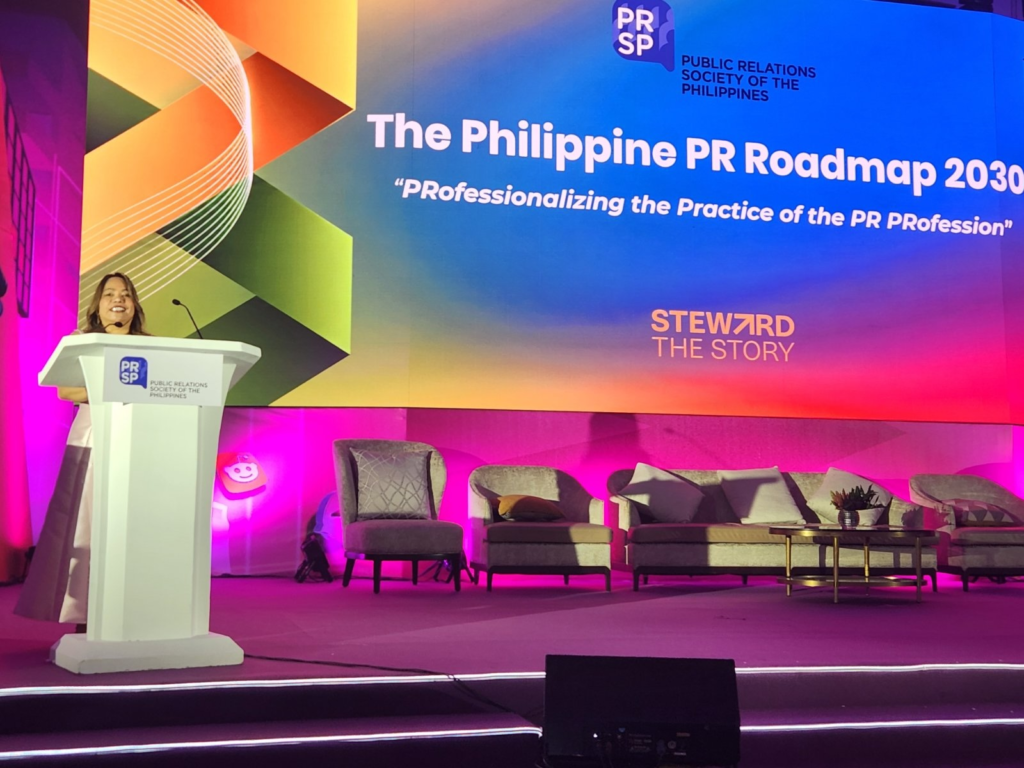
Pista, who also serves as President of the Public Relations Society of the Philippines (PRSP), outlined the organization’s five-year Philippine PR Roadmap 2030 under the congress theme, “STEWARD THE STORY: From Clout to Legacy.” The two-day gathering examined how the public relations profession can move beyond capturing attention and contribute more meaningfully to organizational strategy and decision-making.
Pista challenged communication professionals to consider the future they want to build for the profession and the steps needed to achieve it.
“Five years from now, what kind of public relations profession do we want to have? And what are we willing to do today to build it?” she asked.
Her answer is the Philippine PR Roadmap 2030, an initiative she described as one of the important legacies she hopes to leave as PRSP president.
“Our goal over the next five years is for public relations to have a recognized seat at the decision-making table, where practitioners help shape strategy, guide decisions, and protect stakeholder trust,” Pista said.
Strengthening the Profession Through Standards and Ethics
For PRSP, earning a seat at the decision-making table requires more than greater visibility. It also means strengthening the profession’s standards, capabilities, ethical foundations, career pathways, and recognition as a strategic partner.
Pista clarified that the roadmap’s focus on professionalizing public relations is not a criticism of current practitioners, but an effort to strengthen the foundations of an established profession.
“Professionalizing the practice of the PR profession does not imply that PR practitioners today are not professionals,” she said. Rather, the goal is to help practitioners become consistently recognized and engaged as trusted professional advisers.
Pista emphasized that professional influence comes with the responsibility to exercise sound judgment and consider how organizational decisions affect people, relationships, and reputation.
“A seat at the table comes with the responsibility to exercise judgment,” she said. “To earn that seat, fulfill that responsibility.”
The five-year roadmap is built around seven interconnected areas: professional standards and accreditation; fair and sustainable industry economics; continuous learning; PR’s strategic recognition; ethics and digital governance; education-to-employment pathways; and stronger regional networks.
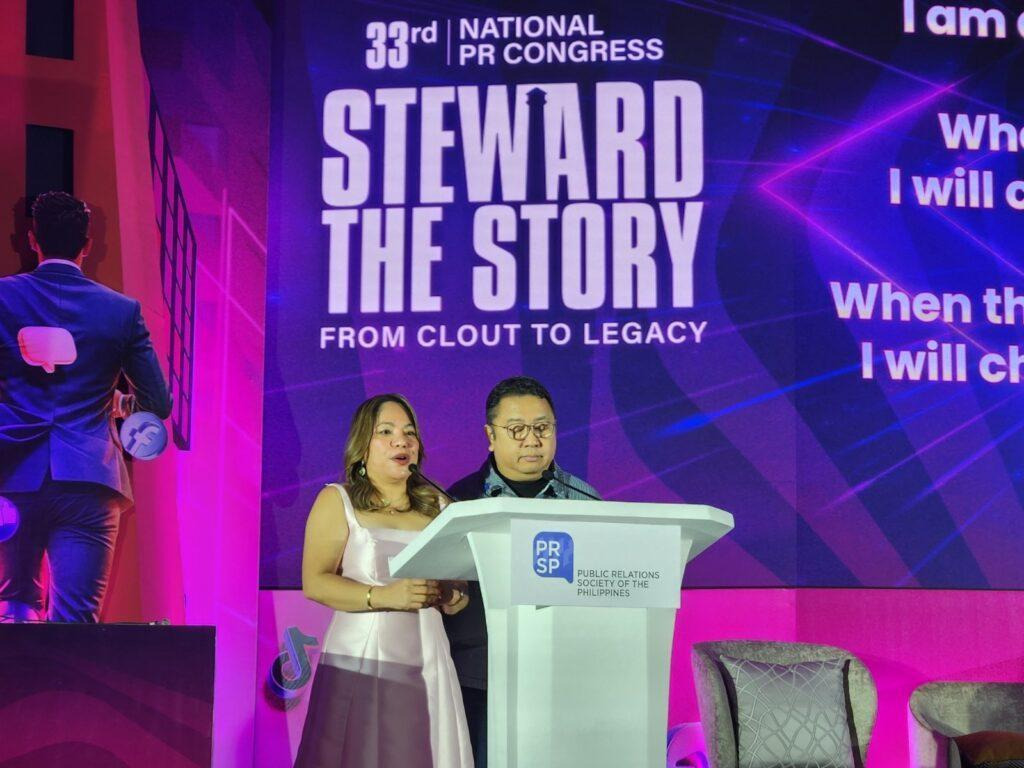
The initiatives include continued learning through the PRSP Academy, greater promotion of the Accredited in Public Relations (APR) credential, and clearer professional development pathways for practitioners at different career stages.
Pista also stressed that accreditation must represent an ongoing commitment to professional standards.
“A professional credential carries a responsibility to remain worthy of it,” she said. “Accreditation should not simply be a title. It should be a standard that gives employers, clients, and the public greater confidence in the profession.”
Connecting Education With Professional Practice
The roadmap also addresses the need to better prepare students for the realities of public relations work.
During the Congress, The Marketing Lab of San Beda University and the San Beda Junior Marketing Association presented The Praxis Paradox: A Structural Audit of the Mismatch between Academic Foundations and Professional Public Relations Practices in the Philippines.
The collaborative study drew on focus group discussions with PR practitioners and academic leaders from PRSP, IABC Philippines, and IPRA Philippines. It examined how academic preparation can better reflect changing industry needs, including strategic planning, data literacy, AI ethics, and narrative intelligence.
Pista said universities and practitioners share responsibility for preparing young people for the profession through updated curricula, stronger industry-academe partnerships, and meaningful internship opportunities.
“We cannot ask young people to build their future in PR if we fail to build a future for them within it,” she said.
To strengthen the connection between education and employment, PRSP is establishing a Job and Internship Hub to connect emerging practitioners with internship and employment opportunities and create clearer pathways into the profession.
From Visibility to Credibility
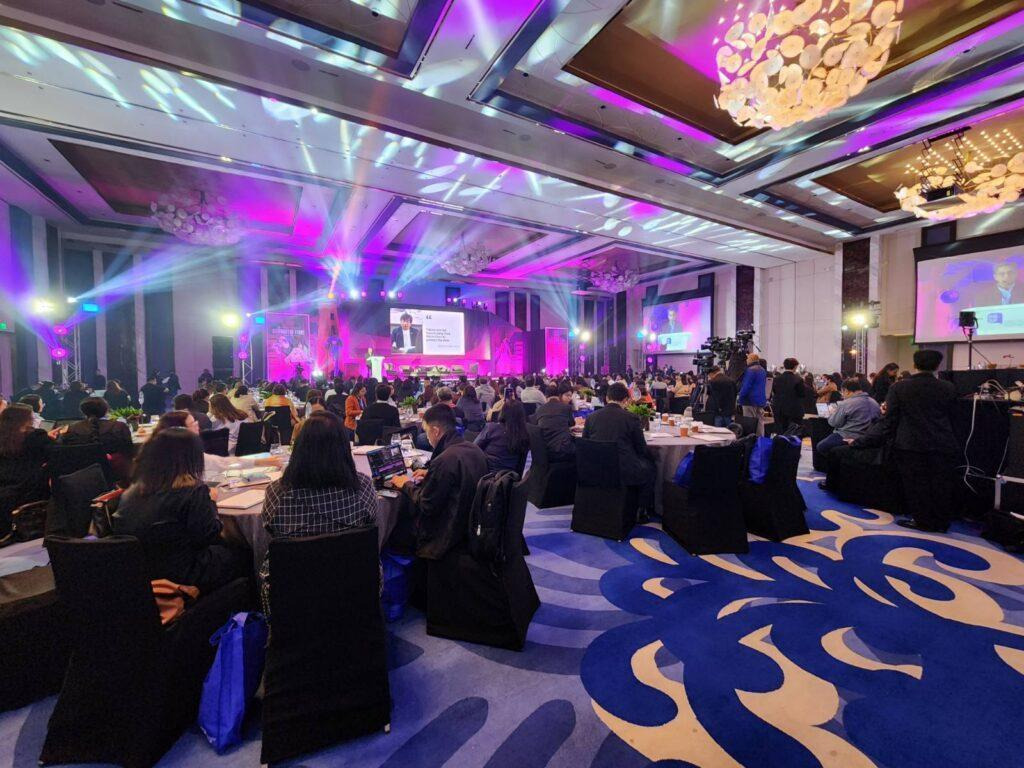
Former Communications Secretary Herminio “Sonny” Coloma Jr., the Congress keynote speaker, also challenged practitioners to look beyond traditional measures of reach and visibility.
Reflecting on the congress theme, Coloma said the value of a story extends beyond the number of people who hear it, the likes and shares it generates, or the followers an organization accumulates.
“Love is attention, trust is belief, legacy is consequence,” Coloma said, emphasizing the need to move audiences from attention to belief and, ultimately, lasting impact.
He also urged PR practitioners to look beyond managing an organization’s image and consider whether the organization deserves the trust it seeks.
“The best public relations is not simply about telling a better story. It is about helping organizations become worthy of a better story,” Coloma said.
His remarks reinforced the Congress’s call for practitioners to take a more strategic role in organizational decisions, with influence grounded in substance, sound judgment, and integrity.
Extending Professional Development Across the Philippines
The Philippine PR Roadmap 2030 also seeks to expand professional development beyond Metro Manila.
PRSP has established Regional Satellite Networks in the Visayas and Mindanao, with the Visayas network launched in Cebu in July. These networks aim to bring professional development, representation, and industry-academe collaboration closer to practitioners, educators, and students outside the capital.
“Professionalizing the profession must include practitioners across the Philippines,” Pista said.
The networks are intended to identify regional needs, develop local talent, strengthen institutional partnerships, and give practitioners a greater role in shaping the profession.
Navigating Technology With Human Judgment
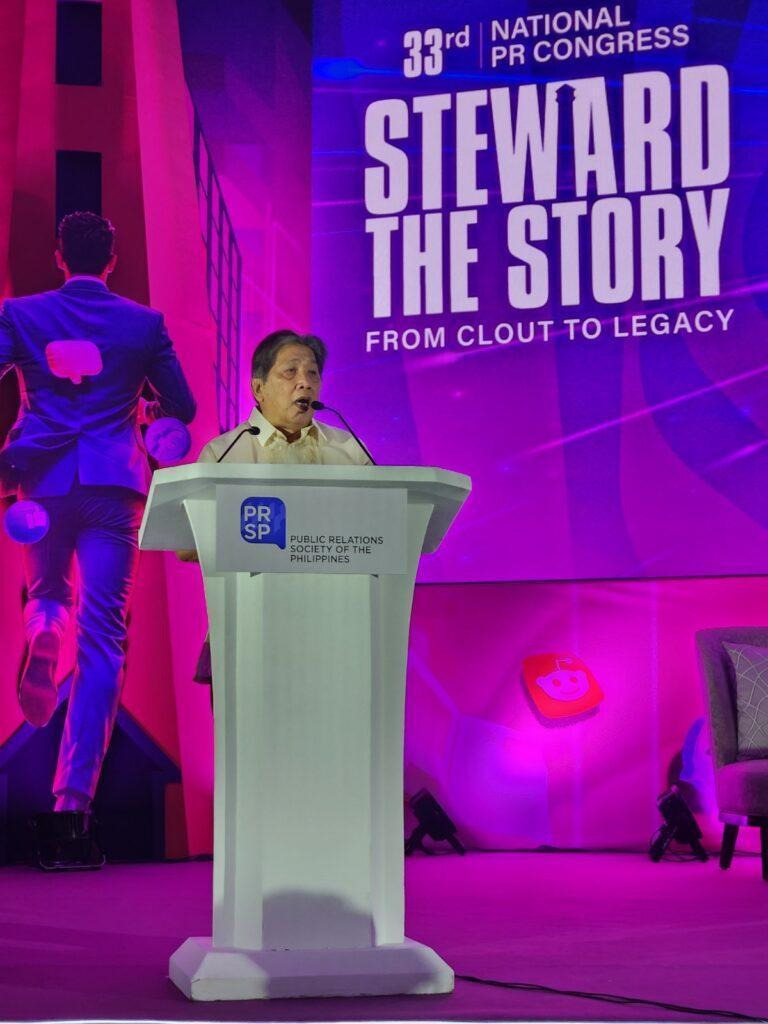
The Congress also addressed how artificial intelligence is changing the communications landscape. As AI reshapes how practitioners research, create, and distribute content, expectations around transparency, accountability, and trust continue to grow.
Pista emphasized that technological advancement does not remove the responsibility of communicators. Practitioners must assess AI-generated outputs, verify information, recognize bias, protect confidential material, and determine when human judgment should take precedence.
“Technology should strengthen our capacity to think, investigate, and advise. The accountability remains ours,” she said.
Coloma similarly cautioned against allowing technology and metrics to overshadow the human element of communication.
“Speed is not wisdom. Automation is not empathy. And information is not trust,” he said.
For ACE, whose work focuses on helping organizations adopt AI strategically and responsibly, these discussions reflect the importance of combining technological innovation with human judgment and accountability.
Pista concluded with a call for business leaders, government officials, and organizational heads to involve communications professionals earlier in important discussions.
“Give public relations a seat at the table,” she said. “Through our five-year roadmap, let us prepare a profession to earn it, occupy it with purpose, and make it count.”
The 33rd National PR Congress brought together communication professionals to examine what the industry must strengthen today to help practitioners contribute more meaningfully to the organizations and communities they serve.
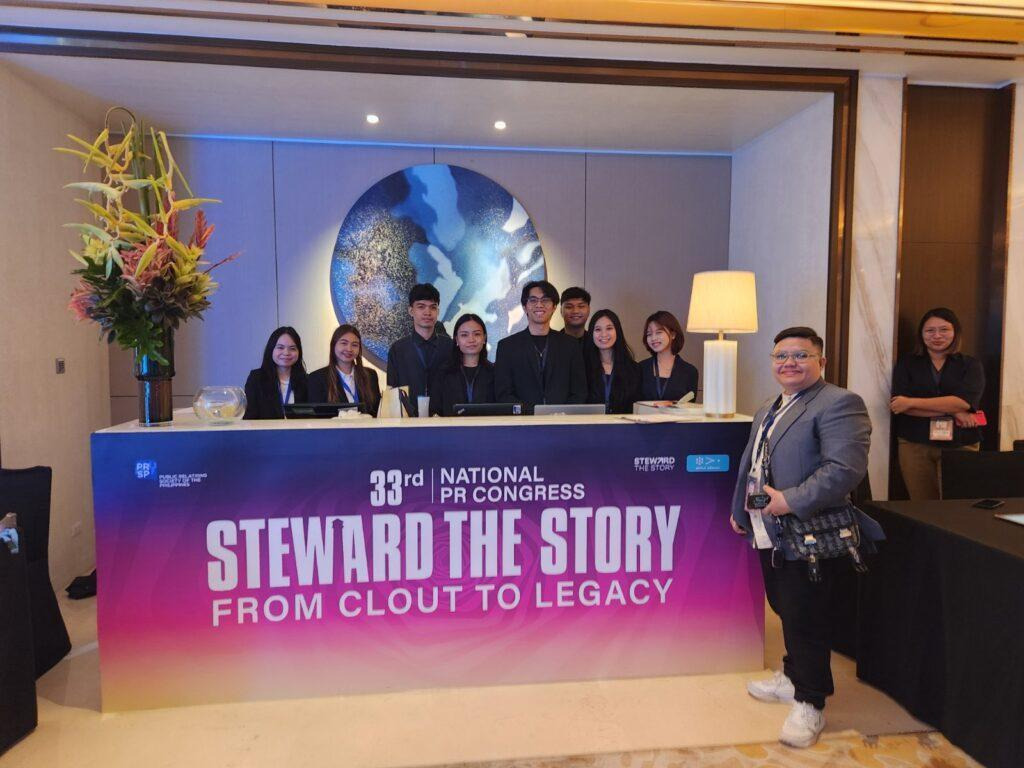
The Congress was supported by corporate and industry partners, including Platinum Partner PMFTC Inc.; Silver Partners CARMA, Development Bank of the Philippines (DBP), DigiPlus, GGC Group Asia, International Container Terminal Services Inc. (ICTSI), Meralco, Pag-IBIG Fund (HDMF), and Pascual Laboratories Inc.; and Bronze Partner Grab Philippines. SM Foundation Inc. served as Corporate Partner, while Grupo Agatep, Ardent Communications, and BrandComm Asia served as Creative Agencies. Media partners included Daily Tribune, GMA Network, INQUIRER.net, Malaya Business Insight, and TheNerve.
About the AI Centre of Excellence (ACE)
The AI Centre of Excellence (ACE) is a specialized AI learning and innovation hub delivering industry-focused training, research, and workshops to help organizations adopt AI strategically and responsibly. Founded in 2025, ACE aims to foster robust collaborations between academia and industry, leveraging AI methods to solve real-world problems.
About the Public Relations Society of the Philippines (PRSP)
The Public Relations Society of the Philippines (PRSP) is a professional organization of public relations practitioners in the Philippines. It works to advance the practice of public relations by promoting competence, ethical practice, continuing professional development, and stronger connections among practitioners, academe, business, and other stakeholders.