LEARN AI • BEGINNER GUIDE
You don’t need to code to become great at AI — here’s the beginner’s roadmap.
7 min read | Updated August 2026
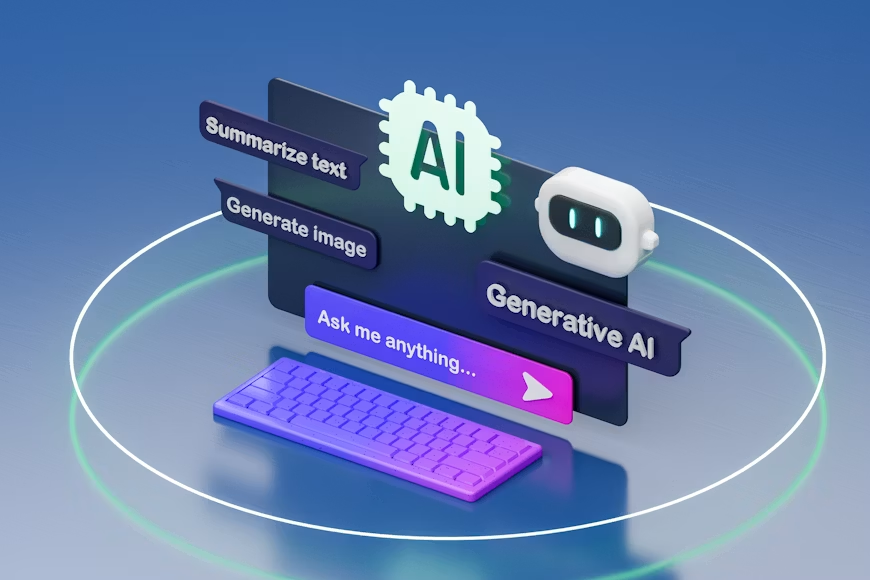
Here’s a quick confession that might make you breathe a sigh of relief: you do not need to be a math genius, a software engineer, or a lifelong tech geek to learn AI. This is that beginner’s guide — no coding required.
When people picture trying to learn AI, they often imagine dark rooms, glowing green code scrolling down monitor screens, and complex algorithmic equations. If that’s what it actually took, most of the professional world would be in serious trouble.
Fortunately, the biggest breakthrough of modern generative AI is that it understands us. For the first time, you don’t have to learn a programming language to work with a machine — you just need to know how to speak clearly, think logically, and ask the right questions.
AI Basics, Explained Simply
To get past the initial intimidation factor, let’s strip away the jargon and look at the core AI basics through an everyday lens. Think of a Large Language Model (the tech behind tools like ChatGPT or Claude) as an incredibly well-read, eager intern who has memorized every book in the world but has zero context about your specific life or office culture.
What it does well
- Summarizing massive blocks of text
- Brainstorming raw creative concepts
- Translating languages
- Formatting messy data patterns
- Writing first drafts
What it struggles with
- Fact-checking obscure, niche data on its own
- Understanding deep human nuance automatically
- Knowing exactly what you want if you give it vague instructions
Looked at this way, your job isn’t to code the intern — it’s to manage the intern. That’s what people mean when they talk about prompt engineering, and it’s a skill anyone can learn, regardless of technical background.

Your Simple 3-Step Action Plan to Learn AI
If you’re staring at a blank chat screen wondering what to type first, follow this simple roadmap to kickstart your journey.
- Treat It Like a Conversation, Not a Search Engine: Don’t just type “marketing tips.” Instead, give the AI a clear identity and a goal. Try: “Act as an expert social media manager for a local bakery. Give me three unique content ideas targeting busy parents.”
- Give Clear Context and Boundaries: The more information you share, the better the output gets. Tell the tool who your audience is, what tone of voice you prefer, and exactly what to avoid.
- Iterate and Refine: Never accept the first response as final. Tell the tool what you like, point out what it got wrong, and ask it to adapt: “I like idea number two, but make the tone a bit more casual and add a call to action.”
Why Non-Technical People Make Great AI Learners
Here’s a secret: non-technical professionals often make the best AI operators.
Why? Because you bring domain expertise, emotional intelligence, and human communication skills to the table. An engineer might know how a neural network functions under the hood, but a seasoned writer, salesperson, or manager knows exactly how a real customer thinks and reacts. That human perspective is your true superpower — and it’s exactly what makes AI tools useful in the first place.

Frequently Asked Questions About Learning AI
Do I need to know math or coding to learn AI?
No. Using modern AI tools effectively is about clear communication and structured thinking, not programming or advanced math. Those skills matter for building AI models, not for learning to use them well.
How long does it take to learn AI as a beginner?
Most people can learn the basics — how to write a clear prompt and iterate on results — in a single afternoon. Getting genuinely good at it, the way you’d get good at any communication skill, takes ongoing practice over a few weeks.
Is it too late to learn AI if I’m not in a technical role?
Not at all. Non-technical professionals often adapt faster because they focus on the outcome — the message, the customer, the deliverable — rather than the mechanics, which is exactly where AI tools add the most value.
The Bottom Line
Learning AI without a tech background isn’t just possible — it may actually be an advantage. You already have the domain expertise and communication instincts that make AI tools genuinely useful. All that’s left is practice: start with one small task, apply the 3-step action plan, and build from there.
Ready to put this into practice? Get in touch and we’ll help you build your first AI-assisted workflow.
Tags: learn AI, AI basics, beginner’s guide, prompt engineering, generative AI