

“Software is over.”
That was Brandon Thomas’s declaration after using AI in order to build seven free open-source alternatives to Adobe’s applications.
I was impressed. Not too long ago, you need a team of developers, years of hard work, and a lot of resources to make software. Those days are over.
People can now create a fully functioning software practically for free. And a suite, at that.
But the longer I think about it, the more I wonder about the people who built the original products. Using AI, someone can quickly copy another person’s life work and just give it away for free. Never mind business, what would it mean for the innovators, creators, original thinkers, and trailblazers?
Are we moving so fast with AI that we are forgetting to ask how we should use it?
This is where AI governance comes into the picture. If you’re unfamiliar with the term, AI governance refers to the policies and accountability measures that guide how AI is developed and used responsibly. I know it might sound like another layer of rules and paperwork, but I think it matters now more than ever.
First, we need to distinguish competition from piracy.
There’s nothing wrong with building an alternative to an already established product. Competition gives consumers more choices and businesses cannot expect to be protected from every idea that challenges them.
But Thomas’s project raises a bigger question about AI-assisted software piracy.
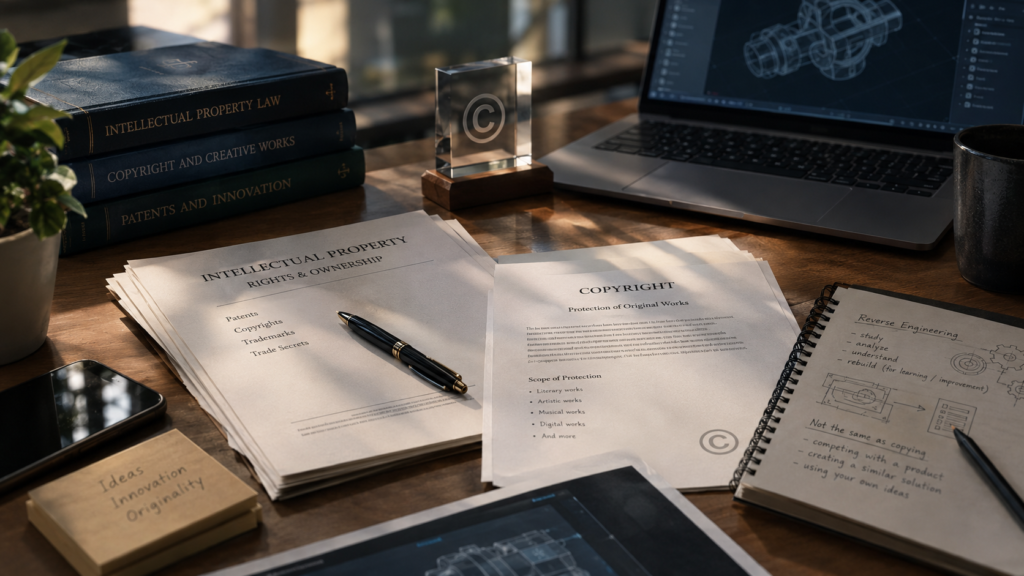
He studied how Adobe’s software works and then used AI to build ArtCraft, a set of applications that replicate its functions. Even if he did not use Adobe’s exact source code and wrote an entirely new set of code, his project could still face legal trouble if the applications closely imitated Adobe’s.
AI is making it easier to replicate existing products in ways that could cross the line into software piracy. In Apple vs. Microsoft and HP, the former lost because the judge ruled that you can only copyright code not function.
But that was before AI.
Thomas also released these alternatives for free. Isn’t that equivalent to digital dumping, or even predatory pricing? People would naturally flock to free products rather than pay for software with subscriptions, especially when the alternatives offer similar functions.
Here’s another example. In the 1990s, Netscape Navigator was the dominant web browser and charged a licensing fee. Microsoft introduced Internet Explorer and gave it away completely for free, bundling it directly into the Windows operating system.
Because Microsoft had massive profits from Windows and Office (deep pockets), it could afford to give its browser away for $0. Netscape could not compete with free, lost its market share, and was eventually driven out of business.
Again, BAI or Before AI.
AI governance is a must. Now.
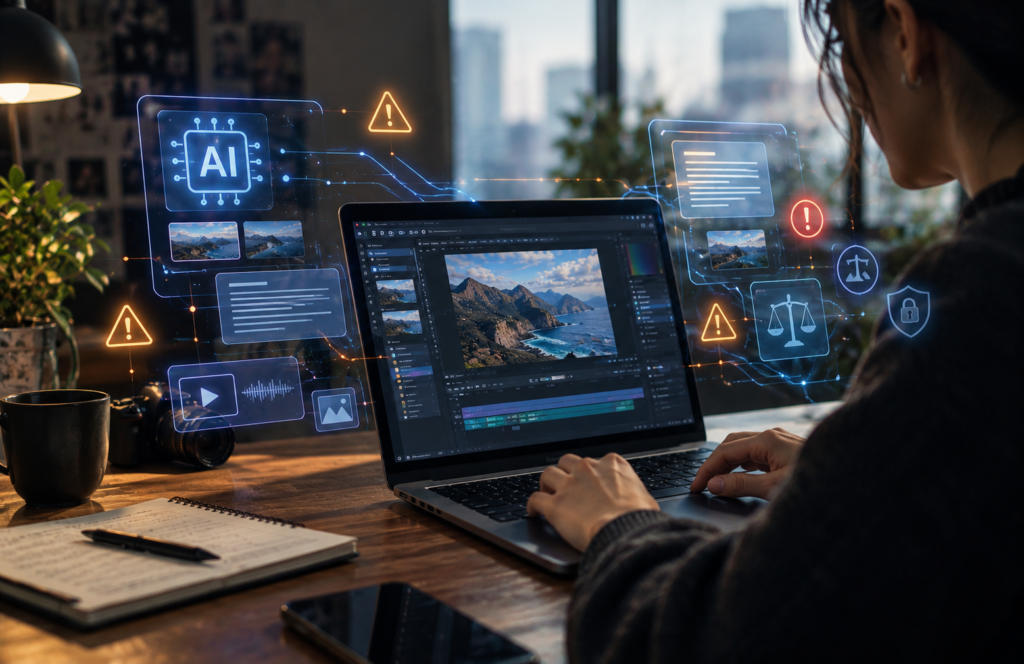
Small businesses are very vulnerable if others use AI to replicate their products and take away their customers.
We risk creating an environment where everything is freely cloned, and cloned to be free. This kills innovation which stagnates society.
And this does not stop at creative software like Adobe. There’s also been a report on the rise of PS5 jailbreaks and how AI may be contributing to this trend. It shows how AI’s impact extends beyond creative software to gaming, where it may also make activities such as jailbreaking and unauthorized access to games easier to carry out.
For developers and creators, why would they keep spending vast amounts of time and money publishing something original? Just for a copy cat to hit the market a week later.
Second, AI governance should regulate innovation.
I don’t think the answer is to stop people from using AI to create new things. Thomas’s project shows just how much AI can change software development.
However, AI innovation should be regulated to ensure that it does not come at the expense of other people’s work and intellectual property. Just because we can do something does not mean we should do it without considering the consequences.
For example, the National Institute of Standards and Technology (NIST) has an AI Risk Management Framework that helps organizations identify and manage the risks of using AI. Meanwhile, the Global Alliance for Public Relations and Communication Management’s Responsible AI Guiding Principles emphasize human-led governance and the importance of intellectual property.
These frameworks show that AI governance is not about stopping innovation. It’s about making sure that people understand the risks and responsibilities that come with using technology. If AI makes it easier to recreate existing software, then developers should also consider whether their work respects the rights of others.
And this should not apply only to big companies like Adobe. Smaller businesses, independent developers, and creators also deserve protection. They may not have the resources to fight back when someone replicates their work and releases a free or cheaper competing product.
The AI Centre of Excellence also discusses the importance of responsible AI through resources such as its article on the ethical challenges of generative AI, which explores concerns around creative work, originality, and human oversight.
I still believe AI’s ability to help people create things that once seemed out of reach is impressive. But innovation should not come at the expense of the people whose work made it possible in the first place.
The real challenge is not stopping the clones from coming. It is making sure that innovation does not come without responsibility. That’s why AI governance can no longer wait.